2002 Pontiac Changed Turn Signal Bulb Now Car Wont Start
Dan Ferrell writes about do-it-yourself car maintenance and repair. He has certifications in automation and control technology.
Turn signal problems and diagnosis can get confusing, especially when a system shares wires and connections with the parking, warning, and braking light systems.
Most common problem sources include bulbs, wires, connectors, fuses, flasher units, and switches. So the average car owner can troubleshoot these faults with the use of a test light and, sometimes, a digital multimeter (DMM).
When dealing with any vehicle electrical circuit fault, it's a good idea to have the repair manual for the particular vehicle make and model you'll be working on. It helps you identify not only wires and components and their related connections, but how to access, troubleshoot and replace components, as necessary.
Furthermore, sometimes it is necessary to access the turn signal switch. You'll have to remove covers and, possibly, the steering wheel. If your vehicle has airbags, it is necessary to disable the passive restraint system (airbags) before working around the switch to prevent accidentally hitting an inertia sensor that may activate the airbags.
Always follow the instructions and warnings in the repair manual for your particular model to prevent an accident. Haynes manuals are popular and practical maintenance and troubleshooting guides. Get the one for your car make and model.
To make troubleshooting easier, this guide is divided into the most common types of turn signal system failures, troubleshooting procedures, and tips to guide you toward the potential fault much faster. Just look for the section heading that describes your particular problem.
| Index |
|---|
| I. One of My Turn Signals Doesn't Work |
| Checking a Light Bulb Socket for Ground and Power |
| II. One Side of the Turn Signal Lights Doesn't Work |
| III. My Hazard Lights Don't Work But the Turn Signals Do |
| IV. Turn Lights Flash Too Fast or Slow |
| V. Turn Signal Lights Don't Work |
| VI. Turn Signals Don't Flash |
| VII. Turn Indicators on Dash Don't Flash |
| VIII. Turn Indicators Don't Work But Turn Signals Do |
| IX. Checking the Turn Signal Switch |
| X. Testing the Turn Signal Flasher |
| XI. Turn Lights Don't Turn Off |
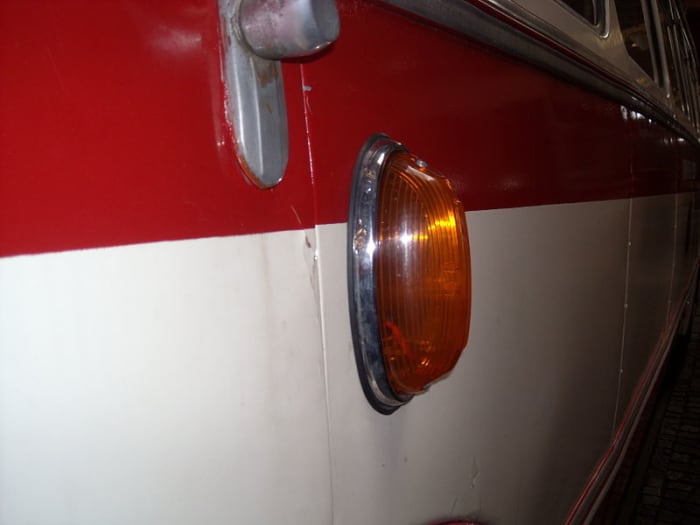
Check all turn lights when troubleshooting the turn signals.
Photo courtesy of Leotard on Wikimedia
I. One of My Turn Signals Doesn't Work
This is one of the most common faults in turn signal systems. Here are some steps you can take to troubleshoot the problem:
- First, check the bulb. You'll need to gain access to the bulb through the engine compartment (front light), trunk (rear light) or by removing the lens itself. Access changes depending on model. If necessary, consult your vehicle repair manual.
- Most likely, the turn signal bulb is a two-filament type. Make sure both filaments are in good condition, and that the bulb glass is not darkened. Otherwise, replace the bulb with another one of the same type and wattage.
- Examine the bulb socket for corrosion or damage.
- If necessary, check the socket ground and power connections. See the next section.
Checking a Light Bulb Socket for Ground and Power
Gain access to the light socket you need to test:
- Unplug the connector.
- Closely examine the connector, harness, housing and socket.
- Look for signs of overheating, corrosion, and damage that may lead to a false or broken electrical connection.
- Pay special attention to ground connections.
You can use a test light here:
- After removing the bulb, clip the test light to the socket wall (ground) and touch each socket contact inside with the tip of the test light.
- Have an assistant operate the turn signal. The test light should flash—otherwise, there something wrong with the ground or power connections.
- Connect your test light to a good chassis ground. A bolt or unpainted metal bracket will do.
- Then touch the socket contacts with your test light tip and have your assistant operate the turn lights. The test light should flash. If it does, check the ground connection at the socket.
- If the test light didn't flash, connect your test light to battery power and touch the socket wall (ground) with the tip of the test light. Your test light should illuminate. If it does, check and repair the power source connection at the socket.
You can repeat the previous test. But this time install the light bulb to the socket and back probe the connections at the harness connector while operating the turn signal. This way you can also test the connector for a false or damaged connection.
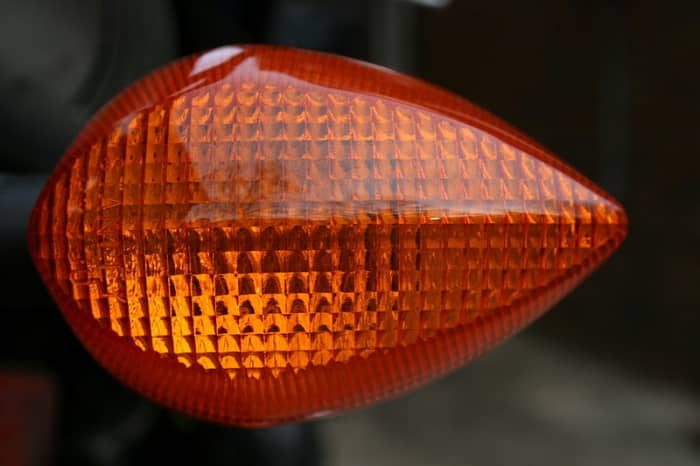
One turn signal can fail in a turn signal system.
Photo courtesy of Ildar Sagdejev on Wikimedia
II. One Side of the Turn Signal Lights Doesn't Work
This is a variation of the previous problems. This time, though, the left or right side of the signals doesn't work. You may see the dash indicator lamps illuminating brightly, but the turn lights won't flash.
Read More from AxleAddict
You may be dealing with bad bulbs, a bad flasher relay, a faulty turn signal switch, or a bad wire or connector between the flasher unit and the turn signal switch.
- First, check the bulbs to see if they are still in good shape: No darkened areas or damaged filaments.
- Then, check the sockets for corrosion, wear or damage.
- Confirm the ground and power connections are working properly. Refer to the 'Checking a Light Bulb Socket for Ground and Power.'
- Check the flasher relay. Refer to section X. Testing the Turn Signal Flasher.
- Check outgoing voltage from the turn signal switch to the faulty turn signal side of the circuit. Use a test light or digital multimeter.
- If necessary, check continuity from each end of the wire, leading from the flasher relay and the turn signal switch.
You may need the repair manual for your specific vehicle make and model to identify wires and components, and possibly to gain access to them.
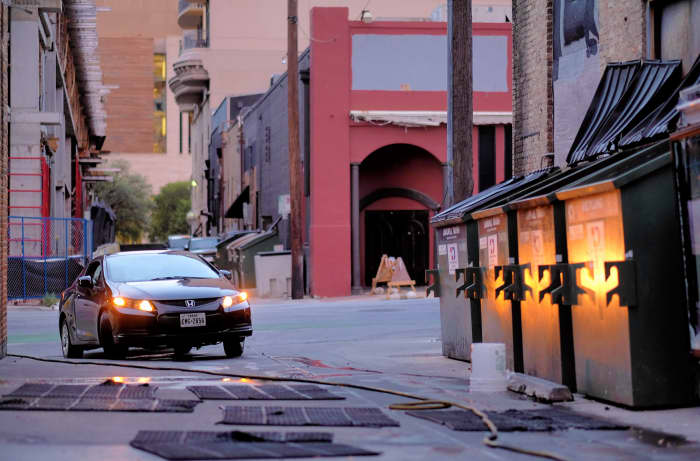
Check that your hazard lights work when troubleshooting your turn signals.
Photo courtesy of Lars Plougmann on Flickr
III. My Hazard Lights Don't Work But the Turn Signals Do
The hazard or emergency lights may share the same circuit with the turn signal circuit.
- When your hazard lights don't illuminate but the turn signals work, usually you are dealing with a faulty hazard-lights flasher.
- However, if the flasher unit is working fine, check the fuse.
- Also, check for a bad connection at the turn signal switch or an open in the part of the circuit that connects the flasher unit to the turn signal switch. See the section 'Checking the Turn Signal Switch.'
- Finally, check for an electrical open or a short circuit in the wiring that connects to the external lights.
IV. Turn Lights Flash Too Fast or Slow
A change in the flashing rate of the turn signal lights isn't common but it can happen.
- If this occurred after replacing the flasher or one of the light bulbs, you may have installed the wrong type of flasher or bulb for your vehicle model.
- Or one of your light bulbs may have burned out. A burned-out bulb can cause the indicator light to flash faster.
Other potential problems that may lead to a change in the flashing rate:
- Poor ground or power connection at the lamps.
- A loose connection at the turn signal switch.
- If the lights are flashing faster than normal, make sure the alternator is not overcharging the battery.
- If the lights are flashing slower than normal, the alternator may have an undercharge condition, or your battery may be undercharged.
V. Turn Signal Lights Don't Work
Another common problem occurs when none of the turn signal lights work.
Note: Normally, you are dealing with a blown fuse, a bad flasher unit, or a faulty turn signal switch. Locate the fuse using your car owner's manual or vehicle repair manual, or check the 'Checking a Light Bulb Socket for Ground and Power' section above, or the 'Testing the Turn Signal Flasher' further down.
Other circuit problems may also lead to this condition:
- Check the bulbs condition.
- Make a visual inspection of the bulb sockets - look for corrosion and damage.
- Verify that the ground connection is working properly. See the section 'Checking a Light Bulb Socket for Ground and Power.'
- Also, check for an open (most likely) or a short.
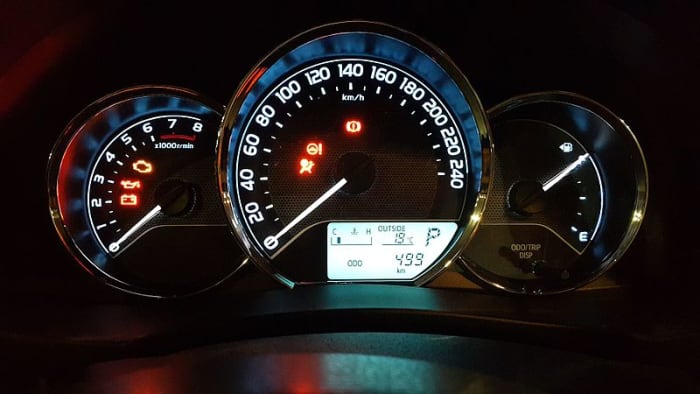
Make sure your turn signal indicators work as well.
Photo courtesy of Kskhh on Wikipedia
VI. Turn Signals Don't Flash
If the emergency lights and turn signal lights illuminate but don't flash, check first for a burned-out bulb. This is the most common cause. If not, you may be dealing with a bad flasher unit or a bad turn signal switch. See the sections 'Testing the Turn Signal Flasher' and 'Checking the Turn Signal Switch.'
If necessary, make the following circuit checks:
Check for a blown circuit fuse.
- Verify that circuit connections are not loose, corroded or unplugged.
- Inspect the wiring harness or terminals for the rear section of the circuit.
- Check for a bad connection between the turn signal switch and the flasher or between the flasher and the ignition switch.
- Check the power side connection to the turn signal switch for a bad contact or open.
- Finally, check for an open or short in the lamp's circuit.
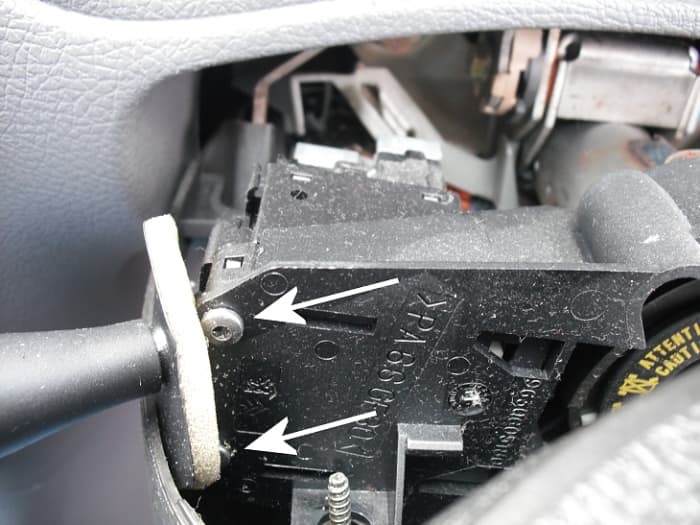
Identify the wires in your turn signal switch using your repair manual.
Photo courtesy of Phil Parker on Flickr
VII. Turn Indicators on Dash Don't Flash
You may know there's something wrong with your turn signal lights because the indicator lights on the instrument panel illuminate but don't flash as usual.
- First, check that your turn lights work properly. If they come on but don't flash, most likely the flasher unit is bad.
- If one of the signal lights doesn't come on, check the bulb; check the bulb socket for corrosion or damage; check for a bad ground at the socket. See the 'Checking a Light Bulb Socket for Ground and Power.'
- Check for an open in the circuit, between the light(s) that doesn't work and the turn signal switch.
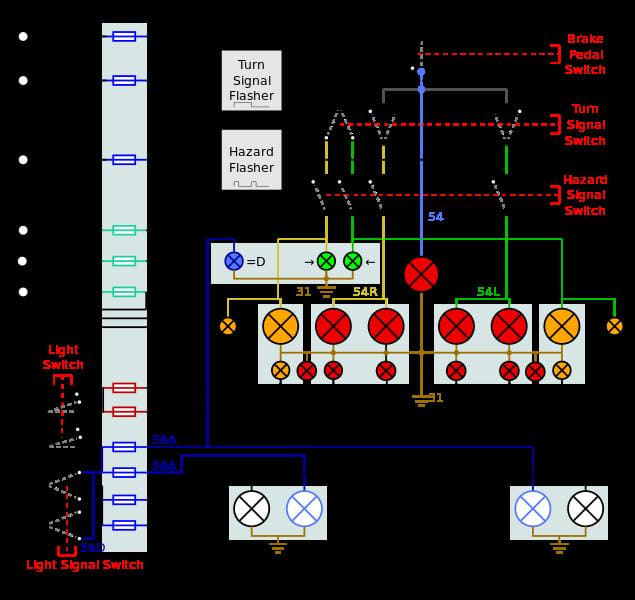
Use your vehicle turn signals schematic when troubleshooting your turn signal lights.
Photo courtesy of Hans Haase on Wikipedia
VIII. Turn Indicators Don't Work But Turn Signals Do
Another problem you may encounter is that your indicator lights don't work at all, but the outside turn lights work fine. Possible causes:
- blown out indicator bulbs
- corroded bulb sockets
- a bad ground
- a problem with the flasher unit
If necessary, consult your vehicle repair manual to gain access to the bulbs on the instrument panel and ground connection.
Although some models use a separate light for the left and right turn indicators, other models use a single light for both turns.
- If your instrument panel has only one indicator light for both left and right, check the flasher unit. Some vehicle models combine the brake light, taillight and turn signal into one light bulb.
- If you have replaced one of the lamps, make sure the bulb is installed properly.
- If the two separate instrument panel indicator lights don't work but the outside turn signal lamps work, check the indicator light bulbs and flasher unit.
IX. Checking the Turn Signal Switch
Troubleshooting the turn signal switch is pretty much straightforward. Usually, depending on your particular model, getting access to the switch electrical connector is the hardest part.
For this test, it is a good idea to consult the vehicle repair manual for your particular model. You need to identify wires and the best way to access the signal switch electrical connector. Also, if your model has airbags, you may need to disable the system to prevent the bags from accidentally inflating. If necessary, your manual will walk you through the process for your particular model.
- Find the wiring diagram for the turn signals in your vehicle model using the repair manual.
- Identify the wires carrying power from the flasher unit to the switch and the wires carrying power from the switch to the turn signal lights. Check the color designation for these wires and, if necessary, the terminal number on the electrical connector of the turn signal switch.
- Gain access to the turn signal switch electrical connector. You may need to remove an under-dash panel or column cover to see the electrical connector.
- Look for the wires that you identified in step 2.
- Turn the ignition key to the On position, but do not start the engine.
- On the switch connector, find the wire that supplies power to the turn signal switch.
- Connect your test light to a good ground under the dashboard - a metal bracket or bolt will offer a good ground.
- Operate the switch to turn the left turn signal light.
- Back probe the wire that supplies power to the switch; the test light should flash. If the test light doesn't flash, there is a problem with the flasher unit or an open or short between the switch and the battery power source.
- Back probe the wire at the connector that supplies power to the left turn signal lights; the test light should flash. If the test light doesn't flash, the switch is bad. Replace the switch.
- Back probe the wire that supplies power to the right turn signal lights; the test light should not light. If the test light illuminates, replace the switch.
- Repeat the test, but this time operate the switch so the right turn signals light. The only difference in your results this time is that your test light should flash when back probing the terminal that supplies power to the right turn signal lights, but not the left turn signal lights. Otherwise, you need to replace the switch.
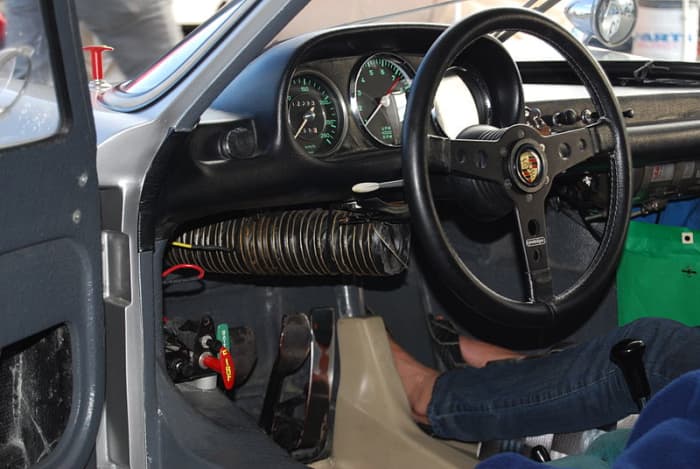
The turn signal flasher may be lcoated under the dashboard or inside the engine compartment.
Photo courtesy of Bill Abbott on Wikimedia
X. Testing the Turn Signal Flasher
NOTE: This guide deals with analog type flashers. If your system is equipped with a solid state unit, consult your vehicle repair manual for special instructions. Also, make sure to use a digital multimeter with at least 10 Mega-ohm of impedance to protect sensitive circuits in your vehicle as you troubleshoot electrical systems.
A good way to test the flasher unit is to use a known good unit, but that may not be practical. So the next best choice is to test the suspected flasher while installed in the vehicle. Your circuit connections may differ from the outline described here, but you'll find the next general steps helpful. If necessary, consult your repair manual.
- First, locate the flasher; you may find the unit under the dashboard near the steering column, or near the battery in a junction box or 'power center.' Consult your vehicle repair manual, if necessary.
- Locate the wiring diagram for the turn lamps in your vehicle repair manual.
- Identify the colors of the wires that connect to the flasher unit. Identify the wire that supplies power to the flasher, and the wire going from the flasher to the turn signal switch to operate the turn signal lamps.
- Connect your test light to ground.
- Turn the ignition switch to the On position but do not start the engine.
- Operate the turn signal switch in either direction (left or right).
- Back probe the power wire that connects to the flasher unit. The test light should illuminate. Otherwise, you have a blown fuse, or there's an open between the flasher unit and its power source (fuse box or battery).
- Without operating the turn signal switch, back probe the wire going from the flasher unit to the turn signal switch. The test light shouldn't flash. Otherwise, the flasher is no good.
- Now, operate the turn signal switch and back probe the wire going from the flasher unit to the turn signal switch. The test light should flash. Otherwise, the flasher is no good.
The next video shows you a common procedure when replacing a flasher unit on a GMC truck. Depending on your particular vehicle make and model, you may or not need to remove the dashboard trim. On some models, the flasher is readily accessible. Consult your vehicle repair manual.
XI. Turn Lights Don't Turn Off
This is a special turn signal failure. It has to do with the mechanical operation of the signal switch rather than an electrical system failure. For example, you signal traffic your intention to turn left or right, but after cornering, the turn signal continues to flash.
There are two reasons for this type of failure: Either the canceling finger inside the switch is broken, in which case you need to replace the switch; or the canceling cam/clockspring is broken, in which case you need to replace the cam or assembly, depending on your particular model.
In most cases, the repair is within the reach of the average car owner. Still, consult the repair manual for your particular vehicle make and model. Specially if your model has airbags. You'll need to disable the system for safety reasons. Also, your repair manual will tell you what specific tools you need, if any, and the procedure to follow.
Turn signals, and the system they are part of, can fail in many ways. When facing a problem, always check every light so that you know what part of the system or lights are failing. This will make troubleshooting, and fixing the problem, easier and faster. This guide is designed to help you make your repair faster, and get back on the road safer.
This article is accurate and true to the best of the author's knowledge. Content is for informational or entertainment purposes only and does not substitute for personal counsel or professional advice in business, financial, legal, or technical matters.
Questions & Answers
Question: My right turn signal doesn't work at all but the flashers work perfectly. What could the problem be?
Answer: The problem may be with the turn signal switch. You can use a test light to check that part of the circuit. If you don't have the manual for your particular model, your local library may have a copy, in case you need it for reference.
Question: My turning indicators don't flash on the dashboard as well as no flashing lights on all the four outside lights but the hazards work. What would it most likely be wrong?
Answer: Check the fuse for the turn signals circuit. Take a look at the flasher unit as well. If they are okay, make sure you have incoming and outgoing voltage on the turn signal switch. There are different setups for the hazards and turn signals. You may need the wiring diagram for your particular model, if you are dealing with a loose or disconnected wire. You can buy a copy at most auto parts stores.
Question: Why does my left turn signal not work while the right turn signal does?
Answer: Check the bulbs on the bad side. The problem can also come from that part of the circuit or the switch itself. Take a look at section II in the post. It may help you diagnose the problem.
Question: My left blinker works just fine but when I use my right, the blinker noise happens but no light pops up on the instrument pannel and both the front and back right blinker dont work. But my hazards do. I've already replaced the flasher unit and the switch on my steering wheel. What could be the issue?
Answer: Need to check the circuit grounds and power for that side of the lights. You can do this with a test light or digital multimeter. Check the wiring diagram in your vehicle repair manual to trace the circuit branch for that leg.
Question: I have a 1994 Chevrolet Blazer. My right turn flashers only dimly flash when running lights are on. New bulbs replaced pigtail, replaced flasher relay. What could cause a dim flashing for the front right turn signal only?
Answer: Check the grounds for the lights. There could be a bad connection. Connect a test light to a good ground, battery negative if possible. Then touch the bulb base with the test light. If it lights good, you got a bad ground.
Question: Why does my turn signal continue to flash after I turn?
Answer: There seems to be a mechanical problem with the turn signal switch. It's not canceling after the steering wheel returns to its normal position. You may need a new switch.
Question: Why do the turn signals work when the car is driven for hours and only in hot days?
Answer: Usually, the problem is in the flasher relay or the multifunction switch. Hope this helps.
Question: I have a 1998 Jackaroo. Sometimes the indicator will work and sometimes it won't work at all and I can't find it mentioned anywhere. Can you diagnose the problem with my 1998 Jackaroo's turn signal?
Answer: Look for a loose wire or connector. You may need your repair manual if you need to remove components.
Question: Why does my turn signal and running light work but not the headlights?
Answer: Check the switch, relay, fuse or module.; if necessary, circuit power and ground using a test light or voltmeter.
Question: I have a 2002. Oldsmobile Intrigue. The left turn signal flashes too fast (I replaced the front bulbs). It worked fine for a month. Then I replaced them again and it worked for 4 hours. What do I check next?
Answer: Make sure you are installing the right bulbs for your application. Also, check the flasher relay. Other possible problems is a faulty connection in the circuit or the switch. You can check the circuit with a test light and the wiring diagram for your particular model.
Question: Why does my right turn signal stay on unless it's in the left signal position?
Answer: Check the light bulbs.
Question: My hazard lights are working but the indicators stay on. Do you know of any solution?
Answer: Check the light bulbs, one of them is possibly blown.
Question: Why won't my right signal light flash?
Answer: The most common reason is a bad flasher, but check the fuses, circuit grounds and opens as well, if necessary.
Question: My car's turn signal blinkers don't come on at all. What could it be?
Answer: Take a look at section V. That'll give you an idea.
Question: My turn signals work with headlights off but do not work with the headlights on?
Answer: Most likely there's a bad ground in the light sockets. Power is going through a ground, and the ground is lost for the turning signals when the lights are on. Check the body grounds and wires in the sockets. Make sure they are clean and well connected.
Question: Why won't my turn signals work? The turn signals won't even come on.
Answer: Check the turn signal (flasher) relay. It might have failed.
Question: Left signal works fine in and out of my car. The right signal hyperflashes inside the car. Right signal works outside in front but not in the back. I replaced the bulbs. Still nothing. Now what?
Answer: You can use a test light or voltmeter to test for power and ground in the faulty rear light. Usually, the problem is a bad ground, but the power wire might be loose, corroded or disconnected. Since the other lights seem to be working fine, concentrate on that part of the circuit. Hope this helps.
Question: The turn indicators work correctly on the outside of the car, but they do not light up on the dashboard. There was a time when the dashboard lights flashed occasionally, so I do not think that it is the light bulbs in the dashboard. I can hear the flasher unit clicking when a turn indicator is selected. Any suggestions, please?
Answer: Check the contacts or the circuit leading to the dashboard, there could be something loose there.
Question: My left turn signal indicator will hyperflash intermittently. No lights are blown and they are not LED. A quick hit to the light housing fixes this for a short time. Checked fuses and wiring. Any idea?
Answer: Check the ground for a poor or loose connection. Other possibility is a failing indicator unit.
Question: My right turn signal won't turn off. What's wrong?
Answer: Most likely the problem is within the switch, the canceling mechanism might have failed.
Question: Why are my turn signal indicators not clicking?
Answer: Check section VII on the post.
Question: Why does my my left turn signal come on when I push it to go right? Sometimes it doesn't work at all.
Answer: Usually this indicates a fault in the multi-function switch.
Question: I have a 2006 Chevy Impala and the right front turn signal is not working. The fuses are good as is the bulb. What else could it be?
Answer: If it is only one bulb that isn't working, make sure the bulb is good and then check the socket, power and ground. You can use a test light for this.
Question: I have a 96 GMC Sonoma. When you turn on the right or left turn signal, they both flash. What could cause this? I just put a new turn signal switch in about a month ago.
Answer: You might need the diagram for your model to trace the problem. The problem may be in the switch itself. Also, look for a wire in the circuit that is touching the other wire in the circuit past the relay. If you have installed the harness connector for a trailer, the problem could be in the wire connector.
Question: Why does my turn signal only work like a hazard?
Answer: You may need to look at the circuit diagram for your particular model. But there could be a problem with the multifunction switch or there's a short in the circuit, activating both sides. Using the diagram, you can trace voltage using a test light.
Question: Why do the hazard lights come on when I am using the left turn signal?
Answer: The most common problem is a shorted light bulb causing trouble, an electrical short in the signal switch, or bad flasher relay.
Question: My car indicators work, but there is no clicking sound. It doesn't have flasher relay. The sound is supposed to come from the cluster itself. What could be the cause?
Answer: Some modern vehicle use a solid state relay, and the computer or some other relay may imitate a clicking sound which you hear through the speakers. If the mechanism is not working, it won't affect your indicators.
Question: I have a 2012 Honda Accord LX. My problem is the left front turn signal stopped working for no apparent reason. All the other turn signals work just fine, including the rear left one. I pulled out the bulb and tested the socket and no power. Is this something that I could fix myself or do I need to have a professional fix it?
Answer: You may be able to fix it yourself. Probably the power wire that connects to the socket or the ground at the socket is loose or disconnected. Use a test light or a voltmeter to check the power wire. If there's power, the problem is the ground. If there's no power, you need to trace the wire back to the switch. Probably is cut or disconnected somewhere. If you need to trace the wire, you may need the wiring diagram from your vehicle repair manual. You can get a manual at most auto parts stores. Hope this helps.
Question: My hazards work and flash; my left indicator works and flashes; my right indicator does not work or flash and there is nothing on the dashboard. I've checked the switch, fuses, bulbs and flasher. How do I fix this awful problem?
Answer: If the flasher is working fine, then the problem could be a bad indicator bulb, socket or circuit problem. You may need the wiring for your specific model to trace the voltage in the circuit, possibly the ground.
Question: The fuses and relay are good but the turn signals on my 2000 Honda Accord LX stopped working all of the sudden. What should I do?
Answer: If none of them are working, start checking at the switch. Check for incoming and outgoing voltage.
Question: My problem is the opposite of number 3 in this article. My hazard lights work fine, so all bulbs are OK and Flasher relay is OK. When using the turn signals from the steering wheel, only the right side of the car works. The left side doesn't, only a very fast clicking sound is heard, like a machine gun. Where is the problem with my car's hazard lights?
Answer: Double check the bulbs and make sure the filaments are Okay. You may want to try swapping the left and right bulbs and see what happens. Possibly the switch is the culprit. But you can check the part of the turn signal circuit for the side that isn't working (lever and switch). Another possibility is a loose wire, or a socket that needs a little twist (bad joint), connection.
Question: My right turn signal "sometimes" does not work. But if I press the hazard it works properly. What could be the problem?
Answer: Sometimes the contacts in the multifunction switch are to blame for this problem. Wiggling the hazard switch makes them work. You might want to have a shop confirm the problem and, if necessary, replace it.
Question: Both my indicators keep flashing and I can't turn them off. What could be the problem?
Answer: There could be a short circuit. A power wire in the turn signal circuit is probably in path with the hazard light circuit. You'll need to test the circuit. A test light or voltmeter and, probably the wiring diagram for your model can help you here. Hope this helps.
Question: I have replaced the signal switch, the relay and a front turn signal bulb. My turn signals will come on for a second and then go off. What else could it be?
Answer: Check the circuit for a loose wire or ground and connectors.
Question: Both of my rear lights aren't working. The indicator blinks rapidly even though I have replaced the bulbs. Any ideas?
Answer: There could be a problem with the power feed line of the circuit. It may be loose. You may need the wiring diagram for your vehicle model to locate and/or trace the wire. You can use a test light for this. If you don't have the manual, try the reference section of your local public library for the manual.
Question: Yesterday, I bought new turn signal bulbs for the left rear and right rear of my vehicle. My left rear already burned out. Why would it burn out the next day?
Answer: Make sure the proper fuse is used to protect the circuit - and check for loose wires around the socket and check the socket itself.
Question: How can I tell if my multiswitch is bad?
Answer: The most common fault in the multifunction switch is wear of the turn signal contacts. They wear out and may begin to fail intermittently or not turn the signal, signal may not cancel; you may experience similar problems with the wipers and headlights. Other than that, you need to gain access to the switch and operate the switch while testing incoming and outgoing voltage with a test light as you operate the different settings. You may need your vehicle repair manual to check the wiring diagram for your particular model.
Question: My turn signal stays on, but doesn't flash. It's the driver side. When I turn off the car, it's still on. It only turns off when I take out a fuse. How do I fix it?
Answer: The problem could be with the flasher (relay). Try removing the relay and plugging it back in and see if the problem goes away. Or replace it. Another possibility is an issue with the switch itself.
Question: Why do my turn signals work when parked but when driving they only flash once or twice?
Answer: Check the circuit relay. It might be failing; or there could be a problem in the switch.
Question: There's a delay when I turn on my indicator and it starts to work. can you tell me the cause?
Answer: this could be a blinker relay problem, but make sure the connections are okay, as well as at the signal switch.
Question: When I turn my right signal on both, front lights flash and the right flash sonic. It's not the fuse. What could it be?
Answer: A bad connection in the switch or a wire in the circuit is crossing over to the other side of the circuit. You can trace outgoing voltage from the switch using a test light. You may need the wiring diagram in your vehicle repair manual to identify the wires.
Question: I have a 2014 model, 3.2 4x4 Ford Ranger. The front and rear, right turn signals don't work but the light indicator on the dashboard work. Any advice?
Answer: There could be a problem with the turn signal switch or a faulty connection. Use the repair manual for your model to locate, gain access to the switch and connectors, if necessary. If you don't have the manual, check the reference section of your local public library. They may have a copy for your specific model.
Question: My turn signals and lights work intermittently but my emergency flashers work fine and when we tested them after testing the emergency flashers they worked fine. What could this be?
Answer: There could be a bad ground in the circuit. You may be able to use a test light to check the circuit. Check the wiring diagram for your model. if you don't have the manual, try the reference section of your public library, if necessary.
Question: I have a 2012 diesel Hilux. The right indicator sometimes flashes quick, or it blinks once to 5 times then stops. Doesn't work at all, blinks fast, then normal, then fast again. It also works fine sometimes. The auto electrician couldn't fix it. Do you have any ideas?
Answer: There seems to be a loose wire, turn signal relay or relay connector. Usually, the indicator will blink fast when a light bulb burns out. But a bad connection in the circuit or relay can produce the same effect. Just need to check that side of the circuit and find the loose connection.
Question: Why won't my right brake light shine when pressured?
Answer: Check the bulbs and the brake light switch.
Question: I replaced my turn signal bulbs. Now my right signal turns on my hazards and my hazards are right signal. Why?
Answer: If the lights were working correctly before replacing the bulbs, check the sockets for corrosion and the connections. There could be a loose wire. A bad flasher relay does the same thing sometimes.
Question: I just put a new bulb in on the back right, and the next day it was failing. I took it out to look, and it looked almost burned or melted on the bottom where it connects inside the socket. What does this mean?
Answer: There might be some resistance at that part of the circuit. Check the connections at the back of the socket. The wire should be well connected. Also, check the ground. Too much resistance will cause the socket and lamp to overheat.
Question: All my left-hand side indicators and hazard warning work; however, the right side doesn't. Would breakdown assist and would it be covered, as it's unsafe to drive home? And as far as I can make out it's not the bulbs or fuses in the car. Although I haven't checked fuses or relays in the engine. Also, the side repeater in the driver's door, which is a fixed unit, that bulb is blown, would it take the whole right side out?
Answer: Usually, this is due to a faulty turn signal switch. But you might want to check the bulbs first, and any potential faulty signs you may see in the sockets or wiring to them. Try swapping the door light bulb with the opposite one and see what it does. You can also test the switch using a test light. Go over section two in the post.
Question: I have a 2007 Ford F650 and the turn signals and the 4 ways have completely stopped working. Just recently the driver's side headlight and turn signal got replaced and within 2 days all of the signals and blinkers have stopped working. What could the cause of this be?
Answer: The problem could be with the turn signal switch-- a bad connection or wire. The switch connects to the hazard flasher switch, causing all the lights to fail. You may need your vehicle repair manual to check the switch and a test light to trace voltage. Is usually not too difficult but access may not be too easy.
Question: My left hand side indicators, lights front, back and side work intermittently. What's the cause?
Answer: If the problem only happens sometimes, there's a loose wire in the connector or the switch itself, on that side of the circuit. You may be able to trace the source of the problem using a test light and the wiring diagram. You can find a diagram in the repair manual for your particular make and model.
2002 Pontiac Changed Turn Signal Bulb Now Car Wont Start
Source: https://axleaddict.com/auto-repair/Turn-Signal-Problems-and-Diagnosis
0 Response to "2002 Pontiac Changed Turn Signal Bulb Now Car Wont Start"
Post a Comment